

Tired of Fighting With Your Own Brain?
Microdosing for ADHD, designed for more mental space, steadier attention and less overwhelm.
★★★★★
500+ five-star reviews · 8,000+ clients across Europe
What our clients say
Different by Design. Not Dis-ordered.
ADHD isn't a lack of discipline. It's a different way of experiencing the world. With the right support, that difference can become a source of clarity, creativity and strength.
ADHD Can Shape Our Relationships in Ways We Don’t Always Recognise as ADHD.
- “I was listening. How did I miss everything you just said?”
- Forgetting something that mattered to the person we love. Again.
- A tiny disagreement going from zero to one hundred.
- Hearing criticism when our partner is simply trying to tell us what they need.
- Wanting to follow through. And still not following through.
- Realising the person beside us has started carrying more and more of the life we built together.
- Being able to hyperfocus for hours, while somehow struggling to give that same attention to the person we love.
ADHD doesn’t only affect our professional lives.
It gets personal.
read more
ADHD is often discussed through the lens of productivity: difficulty concentrating, procrastination, unfinished tasks, missed deadlines. But some of its most difficult effects can happen far away from work, in our closest relationships.
Attention is part of it. We can care deeply about what someone is saying and still lose the thread. We can interrupt because a thought feels impossible to hold, forget conversations or plans that mattered to the other person, or become so absorbed in something that shifting our attention back to the person beside us feels surprisingly difficult.
Emotional regulation can be part of it too. A small disagreement can feel enormous in the moment. We may react quickly, become overwhelmed, withdraw, or need space precisely when someone we love is asking us to stay present.
And then there can be what happens afterwards: replaying the conversation, regretting how we reacted, worrying that we have disappointed someone again, or being painfully aware that what looked like not caring from the outside was not what we were experiencing on the inside.
These patterns can be painful precisely because the care is often there. Understanding how ADHD can show up between two people can make the pattern easier to recognise while it is happening, and give us more room to respond differently.
Because ADHD isn’t only about how we get through our workday. It can shape how we listen, communicate, argue, repair and stay connected to the people we love.
the basics
What Microdosing Actually Is
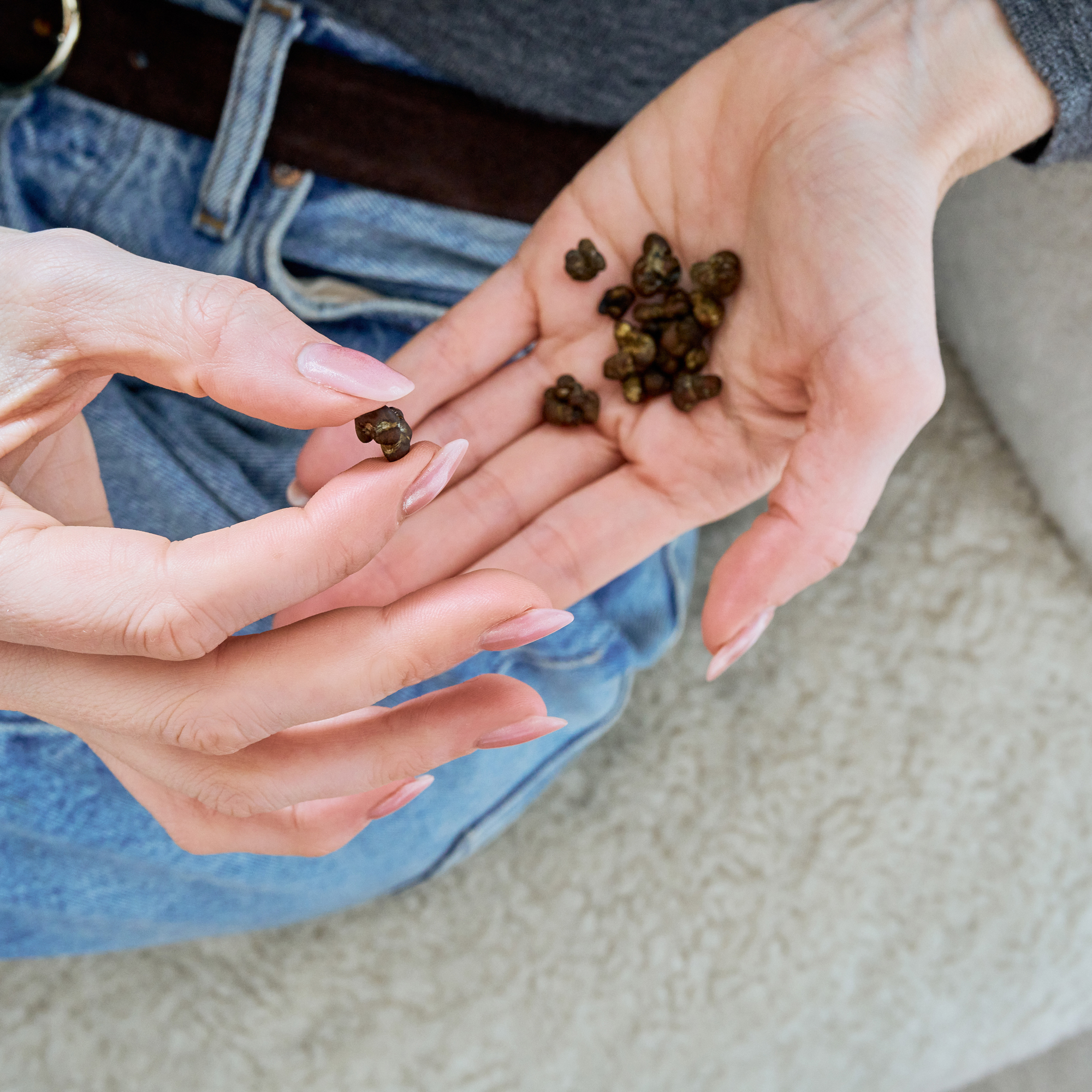
Psilocybin is a compound that occurs naturally in certain mushrooms and truffles. Ours are truffles, grown and packed in the Netherlands.
A microdose is a very small fraction of a psychedelic dose. No high. No hallucinations. You take it, and you get on with your day. Work, driving, your kids, all of it.
learn more
Microdosing means taking a sub-perceptual amount of psilocybin: enough to work with the compound without having a psychedelic trip. You remain yourself and continue with ordinary life.
Mabel uses precisely measured psilocybin truffles on an every-other-day rhythm across five weeks. The aim is not to feel altered. It is to work with the subtler changes in mental space, awareness and patterns while the program gives that window somewhere useful to go.
Why microdosing for ADHD?
Less Noise.
More Room to Choose.
Psilocybin can temporarily make the mind less rigid and more flexible.
That can mean less getting stuck in the same thought, reaction or loop, and more space to shift attention, respond differently and move on.
how it works
5-HT2A receptors
Psilocybin works primarily through serotonin 5-HT2A receptors, temporarily changing how different parts of the brain communicate.
Brain networks
Under psilocybin, brain networks can become less fixed in their usual patterns and communicate more freely with one another.
The Default Mode Network
The Default Mode Network is involved in mind-wandering, self-referential thinking and internally focused thought. ADHD has been associated with altered interaction between this network and networks involved in attention and cognitive control.
Neuroplasticity
Psilocybin can make the brain more open to new connections and less stuck in old patterns.
Microdosing + ADHD. The results.
After four weeks of microdosing, participants reported lower ADHD symptoms than the group using conventional ADHD medication.1
Across inattention, hyperactivity, impulsivity and overall ADHD symptoms.
In a separate prospective study of adults with ADHD or severe ADHD symptoms who began microdosing, researchers also found lower neuroticism after four weeks, meaning less tendency towards worry, emotional instability and getting pulled into negative feelings.2
Haijen, Hurks & Kuypers
Naturalistic studies. Full study design, sample sizes and limitations are listed in Studies & References at the bottom of the page.

What Our Clients Experience After Five Weeks.
178%
MORE
MENTAL CALM
Feeling mentally calm and emotionally balanced
299%
MORE
FREEDOM FROM OVERWHELM
Rarely or never feeling overwhelmed by their thoughts and emotions
267%
MORE
FREEDOM FROM ANXIETY
Rarely or never feeling anxious, restless or on edge
55%
MORE
CONFIDENCE
Feeling confident handling everyday responsibilities
69%
LESS
TROUBLE FOCUSING
Frequent difficulty focusing or staying mentally clear
Measured before and after the five-week program and independently analysed by Daniel Bekele, M.Sc. in Statistics.
Why microdosing alone isn’t enough
The Dose Creates Space.The Practice Gives It Direction.
Mabel combines psilocybin truffles with a carefully guided program and practice across five weeks.
Because creating more space in the mind is one thing. Learning what to do with that space is another.
Across the five weeks, we work with many of the things ADHD can make particularly difficult: staying present, noticing patterns before automatically following them, regulating emotional responses, building supportive routines, and creating more space between impulse and action.
The Five Core Classes
01. Mindfulness: I Am Where I Am Supposed to Be
ADHD can make it particularly difficult to stay with the present moment: the mind wanders, attention gets pulled elsewhere, and reactions can happen before the pause. Dr. Shapiro’s first class trains exactly that pause: noticing when the mind has wandered, returning attention deliberately, and creating more space between stimulus and response.
02. Self-Compassion
Living with ADHD can come with years of self-criticism around forgetting, procrastinating, struggling with routines or simply not doing things the way you think you “should.” Dr. Shapiro teaches self-compassion as an alternative to shame: noticing difficulty without immediately turning against yourself, so there is actually room to learn and change.
03. Forgiveness
ADHD can leave a backlog of things we wish we had handled differently: missed deadlines, forgotten promises, impulsive reactions, unfinished plans. Dr. Shapiro’s class is about putting down the anger and resentment we continue to carry, including towards past versions of ourselves, without pretending what happened did not matter.
04. Gratitude
When the mind is constantly scanning what is urgent, unfinished or wrong, what is already good can become remarkably easy to miss. Dr. Shapiro’s gratitude practice deliberately widens attention: not denying what is difficult, but training ourselves to notice what else is here alongside it.
05. Manifesting My Future
ADHD can make the immediate moment feel enormous while the future remains abstract and difficult to act towards. Dr. Shapiro’s final class brings imagination and action together: getting clear on what we actually want, visualising it in detail, and connecting that vision to practical steps towards the future we want to create.
The Mindful Microdosing Program
Five Weeks.
Everything Included.
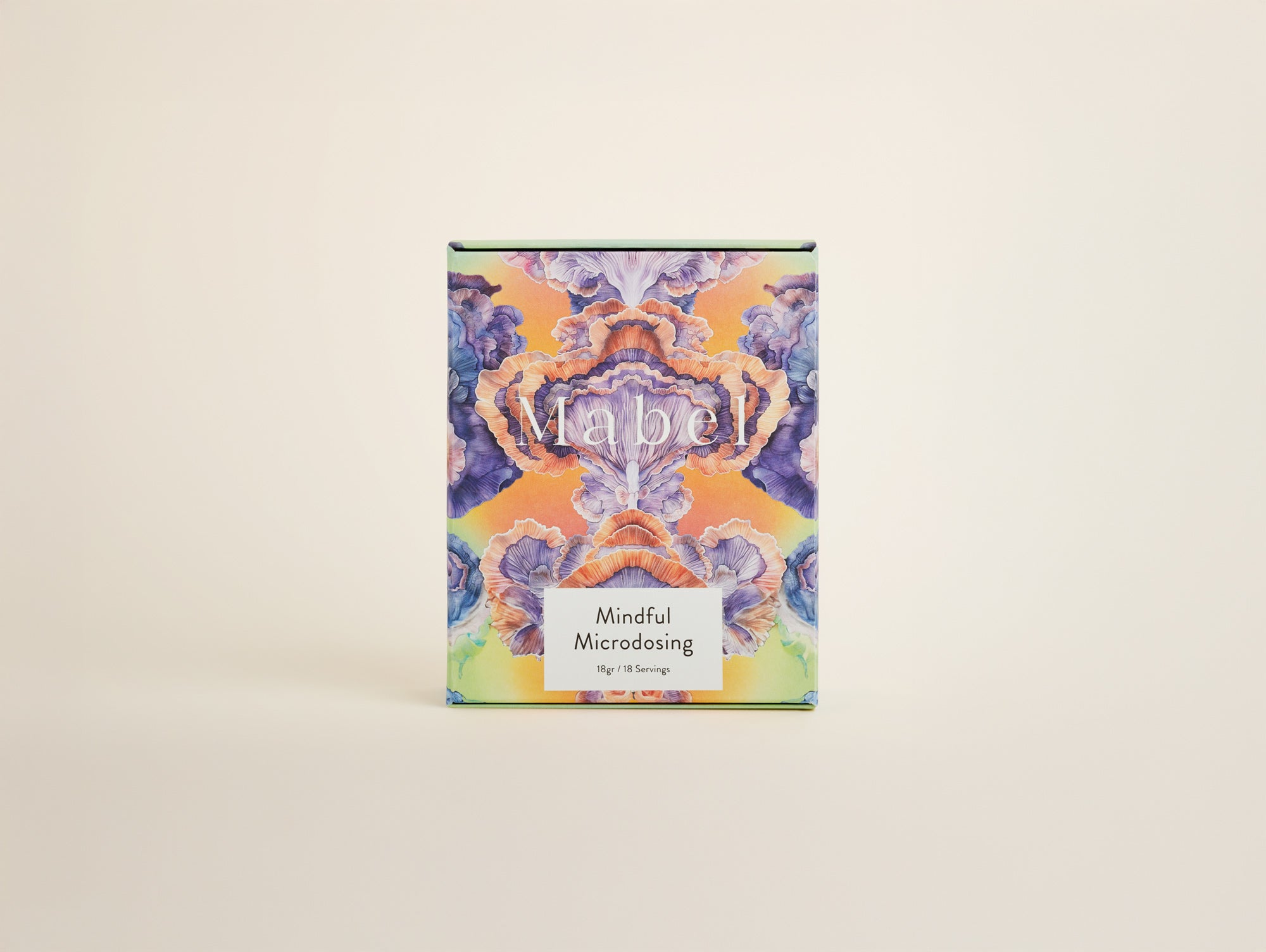
- 18 precisely measured doses. 1g psilocybin truffles, taken every other day.
- Introduction to Microdosing with Dr. Shapiro.
- Five classes with Dr. Shapiro, each under 10 minutes.
- Journal and guided practices in the Mabel app.
On Medication, Off It, or Still Deciding.
They’re not doing the same job.
| Prescription stimulants | Mabel | |
|---|---|---|
| What it is | Prescription medicine, usually taken daily | Naturally occurring psilocybin, taken every other day |
| How it works | Raises dopamine and norepinephrine | Acts primarily on serotonin receptors, changing communication across brain networks3 |
| What it works on | Focus, attention, impulse control | Focus, mental noise, overwhelm, emotional regulation |
| What it feels like | Switched on. For some, wired or emotionally flat. | Quieter. More present. More focused. More emotionally steady. |
| Side effects | Appetite suppression, insomnia, raised heart rate, anxiety6 | Generally well tolerated at microdoses.3 |
| Dependence & addiction | Potential for misuse, abuse and addiction.4 | No physical dependence. No withdrawal. No compulsive use.5 |
| What you’re doing | Managing symptoms pharmacologically | Working with attention, patterns and emotional regulation |
What it is
Prescription medicine, usually taken daily
Naturally occurring psilocybin, taken every other day
How it works
Raises dopamine and norepinephrine
Acts primarily on serotonin receptors, changing communication across brain networks3
What it works on
Focus, attention, impulse control
Focus, mental noise, overwhelm, emotional regulation
What it feels like
Switched on. For some, wired or emotionally flat.
Quieter. More present. More focused. More emotionally steady.
Side effects
Dependence & addiction
What you’re doing
Managing symptoms pharmacologically
Working with attention, patterns and emotional regulation
If you take ADHD medication, keep taking it as prescribed, and speak to the clinician who prescribed it before adding anything. Nothing on this page is a reason to change a prescription.
See studies and references at the bottom of the page.
The Minds Behind Mabel
Built With People Who Have Spent Their Careers Studying the Mind.

Dr. Shauna Shapiro
Clinical psychologist. Professor. 150+ published papers. Fellow of the Mind and Life Institute. Has trained teams at Google, Stanford Medical School and Harvard Law.
Her work shapes the five classes at the heart of the Mabel program: mindfulness, self-compassion, forgiveness, gratitude and manifestation.

Dr. Amir Lotfi
Neuroscientist. Six years at Beckley Psytech / AtaiBeckley developing BPL-003. Expert in psilocybin pharmacology and clinical-trial design.
His expertise informs the science behind how we think about psilocybin, dosing and the Mabel protocol.
Psychology. Neuroscience. Psychedelic pharmacology.Built into one five-week program.
A Note From Pernille
I built Mabel because of what I got back through microdosing. The clearest way I can name it now is: my own power. Over my thoughts, my patterns, my attention.
For years, my mind ran me instead of the other way around. When the mind settled, everything downstream of it settled too. My work. My relationships. The way I spoke to myself.
The loops didn't disappear. They stopped being in charge.
Mush love,
Pernille, Founder of Mabel

Not Ready to Start Yet?
Stay close while you decide. Research, practical tips and stories on microdosing for ADHD, straight to your inbox. Plus 15% off your first order.
Frequently Asked Questions
How microdosing can help
Can microdosing help with ADHD?
The research is early and mostly naturalistic, so nobody should promise you an outcome. What the studies report is real: adults with ADHD who microdose describe less inattention and hyperactivity, steadier emotion regulation, more self-compassion and less rumination.12 Our own clients describe the same, most clearly by weeks three and four.
Can you microdose while taking ADHD medication?
Keep taking your medication as prescribed, and speak to the clinician who prescribed it before adding anything. Stimulants act on dopamine and norepinephrine; psilocybin acts on serotonin. Microdosing has never been tested head-to-head against stimulant medication, and nothing on this page is a reason to change a prescription.
Will microdosing take away my hyperfocus?
Most clients describe clarity rather than flattening, and several describe more creative output, not less. A small number feel less driven on dose days and adjust to a lower dose, or no dose, on their heaviest work days. Your hyperfocus isn't the target. The loop is.
Does microdosing help with the racing thoughts at night?
It's one of the most consistent things our clients report. After five weeks, 15% still felt often overwhelmed by their own thoughts, down from 51.4%. Difficulty falling or staying asleep dropped from 41.1% to 26.2%. Self-reported, our own client data.
Can microdosing help with RSD?
Rejection sensitivity is where clients tend to notice change first, usually before focus. Studies of adults with ADHD who microdose report improved emotion regulation and self-compassion.1 Ours describe a reply landing as a reply rather than a verdict.
Can microdosing help with ADHD paralysis?
Indirectly, and it's worth being precise. Microdosing isn't a stimulant and won't push you into a task. What clients describe is less noise around it: after five weeks, 20.6% still struggled often to focus or stay mentally clear, down from 66.4%.
Does microdosing help ADHD and perimenopause together?
A large part of our community is navigating both, often diagnosed with ADHD late and hitting perimenopause at the same time. It's one of the most common combinations we hear about, and among the most common reasons clients say the usual advice hasn't worked for them.
Is this for me
I've never been formally diagnosed. Is this for me?
Many of our clients recognised themselves years before anyone assessed them, and some are still waiting on an assessment. You don't need a diagnosis to microdose. You may still want one, for treatment options, for accommodations, or simply to stop wondering.
Was my anxiety actually ADHD?
It's a common sequence: treated for anxiety for years before anyone asked what was underneath it. The two overlap heavily, and ADHD can generate anxiety rather than the other way round. That's a conversation for a clinician, not a landing page, but if the question has occurred to you, it's worth asking properly.
Getting started
How long does microdosing take to work for ADHD?
Some clients notice something from the first dose. Most describe a clear shift around week two, with more by weeks three and four. The effects compound rather than peak, which is why the program runs five weeks and not five days.
Will I feel high?
No. No high, no hallucinations. A microdose is a very small fraction of a psychedelic dose. You work, drive, parent and get on with your day.
Is microdosing safe if I have ADHD?
The contraindications are the same as for anyone: a personal or family history of psychosis or bipolar disorder, lithium or MAOIs, or a serious cardiovascular or neurological condition. Side effects, where they occur, are usually mild and dose-related. If you're unsure, ask a clinician you trust before starting.
Should I get the program or just the truffles?
If you’ve microdosed before and know your own rhythm, the truffles alone are €49. If this is new, and especially for an ADHD brain, we’d say take the program for €99. It opens with an introduction from Dr. Shapiro before your first dose, and the structure is the part that holds.
Is it legal?
Our psilocybin truffles are legal in the Netherlands, where every order ships from. Shipping across eligible European markets.
What if I have questions along the way?
Email us at info@mabel.life. We aim to reply within 24 hours, and you will always get a human. Never a bot.
Is microdosing safe for everyone?
Microdosing isn't right for everyone. If you have a personal or family history of psychosis or bipolar disorder, or if you're on lithium, MAOIs, or certain other medications, microdosing isn't recommended. Before adding anything new to your routine, speak with a healthcare provider you trust.
Studies & References
The research behind the numbers.
- Haijen ECHM, Hurks PPM, Kuypers KPC (2024). Effects of psychedelic microdosing versus conventional ADHD medication use on emotion regulation, empathy, and ADHD symptoms in adults with severe ADHD symptoms: a naturalistic prospective comparison study. European Psychiatry 67(1):e18. Naturalistic, self-selected groups; not placebo-controlled.
- Haijen ECHM, Hurks PPM, Kuypers KPC (2023). Trait mindfulness and personality characteristics in a microdosing ADHD sample: a naturalistic prospective survey study. Frontiers in Psychiatry 14:1233585. N=233 at baseline; N=44 at four weeks.
- The Use of Psychedelics in the Treatment of Adult ADHD: A Systematic and Mechanistic Review (2026). International Journal of Molecular Sciences 27(8):3453. Used for mechanism and safety context.
- U.S. Food and Drug Administration (2023). FDA updating warnings to improve safe use of prescription stimulants used to treat ADHD and other conditions. Boxed warnings address misuse, abuse and addiction.
- Johnson MW, Griffiths RR, Hendricks PS, Henningfield JE (2018). The abuse potential of medical psilocybin according to the 8 factors of the Controlled Substances Act. Neuropharmacology 142:143–166. Supporting reference for the dependence, withdrawal and compulsive-use distinction in the comparison above.
- Cortese S, Adamo N, Del Giovane C, et al. (2018). Comparative efficacy and tolerability of medications for attention-deficit hyperactivity disorder in children, adolescents, and adults: a systematic review and network meta-analysis. The Lancet Psychiatry 5(9):727–738. Stimulant tolerability and recognised adverse effects.
These are naturalistic and observational studies. Placebo-controlled research is ongoing. Microdosing is being researched; nothing on this page is a treatment claim.
This page is for informational purposes only and is not medical advice.